 [vc_row type=”in_container” full_screen_row_position=”middle” scene_position=”center” text_color=”dark” text_align=”left” overlay_strength=”0.3″ shape_divider_position=”bottom”][vc_column column_padding=”no-extra-padding” column_padding_position=”all” background_color_opacity=”1″ background_hover_color_opacity=”1″ column_shadow=”none” column_border_radius=”none” width=”1/1″ tablet_text_alignment=”default” phone_text_alignment=”default” column_border_width=”none” column_border_style=”solid”][vc_column_text]Buying your first diamond is an exciting experience. Whether you are choosing an engagement ring, a special gift or a timeless piece of jewellery, you want something that looks beautiful and offers lasting value. However, with so many diamond shapes, styles and quality grades available, knowing where to start can feel overwhelming.
One of the most important things to understand is diamond cut. Although many people assume that cut simply describes a diamond’s shape, it actually refers to how well the stone’s proportions, symmetry and facets interact with light. Consequently, the cut plays a major role in determining how bright and sparkling a diamond appears.
This Diamond Cut Guide will help you understand the basics, compare popular diamond cuts and make a more confident buying decision. From round brilliant diamonds to elegant oval stones, you will discover what makes each option special and how to choose a diamond that suits your style, preferences and budget.[/vc_column_text][/vc_column][/vc_row][vc_row type=”in_container” full_screen_row_position=”middle” scene_position=”center” text_color=”dark” text_align=”left” overlay_strength=”0.3″ shape_divider_position=”bottom”][vc_column column_padding=”no-extra-padding” column_padding_position=”all” background_color_opacity=”1″ background_hover_color_opacity=”1″ column_shadow=”none” column_border_radius=”none” width=”1/1″ tablet_text_alignment=”default” phone_text_alignment=”default” column_border_width=”none” column_border_style=”solid”][vc_custom_heading text=”What Does Diamond Cut Actually Mean?” google_fonts=”font_family:Abril%20Fatface%3Aregular”][vc_column_text]Diamond cut describes how a diamond’s facets interact with light. When a skilled cutter shapes a diamond with carefully calculated proportions, the stone can reflect and return light beautifully, creating the sparkle that attracts so many buyers.
However, diamond cut is different from diamond shape. Shape describes the outline of the stone, such as round, oval, pear or emerald. Cut quality, on the other hand, considers factors such as proportions, symmetry and polish, which influence the diamond’s overall appearance.
For example, two round diamonds may have the same carat weight and similar colour and clarity grades. Nevertheless, the diamond with better cut quality may appear brighter and more lively because it handles light more effectively.
Understanding this distinction is essential for first time buyers. Rather than choosing a diamond based on size alone, consider how its cut influences its appearance.
A well cut diamond can look impressive without requiring the largest carat weight. Therefore, learning about cut quality is one of the smartest first steps you can take when shopping for diamond jewellery.[/vc_column_text][/vc_column][/vc_row][vc_row type=”in_container” full_screen_row_position=”middle” scene_position=”center” text_color=”dark” text_align=”left” overlay_strength=”0.3″ shape_divider_position=”bottom”][vc_column column_padding=”no-extra-padding” column_padding_position=”all” background_color_opacity=”1″ background_hover_color_opacity=”1″ column_shadow=”none” column_border_radius=”none” width=”1/1″ tablet_text_alignment=”default” phone_text_alignment=”default” column_border_width=”none” column_border_style=”solid”][vc_custom_heading text=”Why Is Diamond Cut Quality So Important?”][vc_column_text]Diamond cut quality affects three important visual characteristics: brilliance, fire and scintillation.
Brilliance refers to the white light a diamond reflects. Fire describes the colourful flashes you see when the stone disperses light into different colours. Meanwhile, scintillation refers to the flashes of light and dark patterns that appear as the diamond or its surroundings move.
Together, these characteristics create the sparkle that makes a diamond stand out. However, poor proportions can allow light to escape through the sides or bottom of the stone, reducing its brightness.
For this reason, cut quality can matter more to the overall appearance than you might initially expect. A larger diamond does not automatically look more impressive if its cut limits its sparkle.
When comparing diamonds, examine them under different lighting conditions if possible. Bright jewellery shop lighting can make many stones look attractive, so natural or softer lighting can help you understand how a diamond performs in everyday settings.
This Diamond Cut Guide encourages you to prioritise visual performance alongside size and price.[/vc_column_text][/vc_column][/vc_row][vc_row type=”in_container” full_screen_row_position=”middle” scene_position=”center” text_color=”dark” text_align=”left” overlay_strength=”0.3″ shape_divider_position=”bottom”][vc_column column_padding=”no-extra-padding” column_padding_position=”all” background_color_opacity=”1″ background_hover_color_opacity=”1″ column_shadow=”none” column_border_radius=”none” width=”1/1″ tablet_text_alignment=”default” phone_text_alignment=”default” column_border_width=”none” column_border_style=”solid”][vc_custom_heading text=”Understanding Diamond Cut Grades”][vc_column_text]For round brilliant diamonds, the Gemological Institute of America (GIA) uses five cut grades: Excellent, Very Good, Good, Fair and Poor.
An Excellent cut generally offers outstanding light performance and carefully balanced proportions. Very Good diamonds can also display impressive sparkle, sometimes at a more accessible price. Good cut diamonds may provide an attractive option for buyers working within a tighter budget.
However, a lower grade does not automatically mean a diamond looks unattractive. The overall appearance also depends on its proportions, shape, colour, clarity and the lighting in which you view it.
It is important to understand that grading systems differ between diamond shapes and laboratories. GIA’s standard cut grading system for round brilliant diamonds does not apply in the same way to every fancy shape, such as oval, pear or emerald diamonds.
Therefore, check the grading report before making a purchase. A reputable report can help you understand the diamond’s characteristics and compare similar stones more accurately.
When buying your first diamond, use the grade as a helpful starting point rather than relying on it as your only measure of beauty.[/vc_column_text][/vc_column][/vc_row][vc_row type=”in_container” full_screen_row_position=”middle” scene_position=”center” text_color=”dark” text_align=”left” overlay_strength=”0.3″ shape_divider_position=”bottom”][vc_column column_padding=”no-extra-padding” column_padding_position=”all” background_color_opacity=”1″ background_hover_color_opacity=”1″ column_shadow=”none” column_border_radius=”none” width=”1/2″ tablet_text_alignment=”default” phone_text_alignment=”default” column_border_width=”none” column_border_style=”solid”]
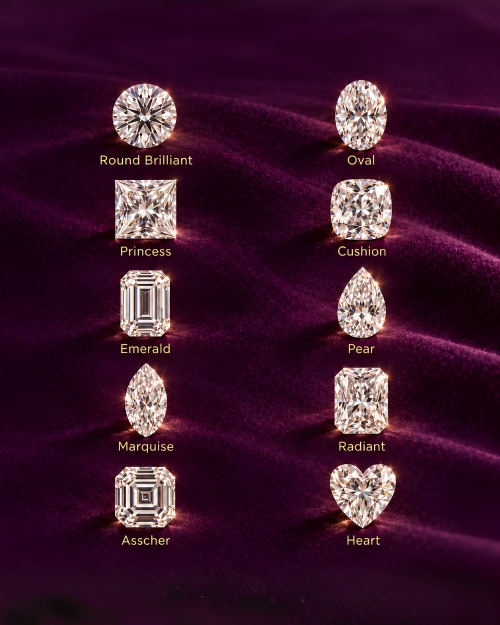
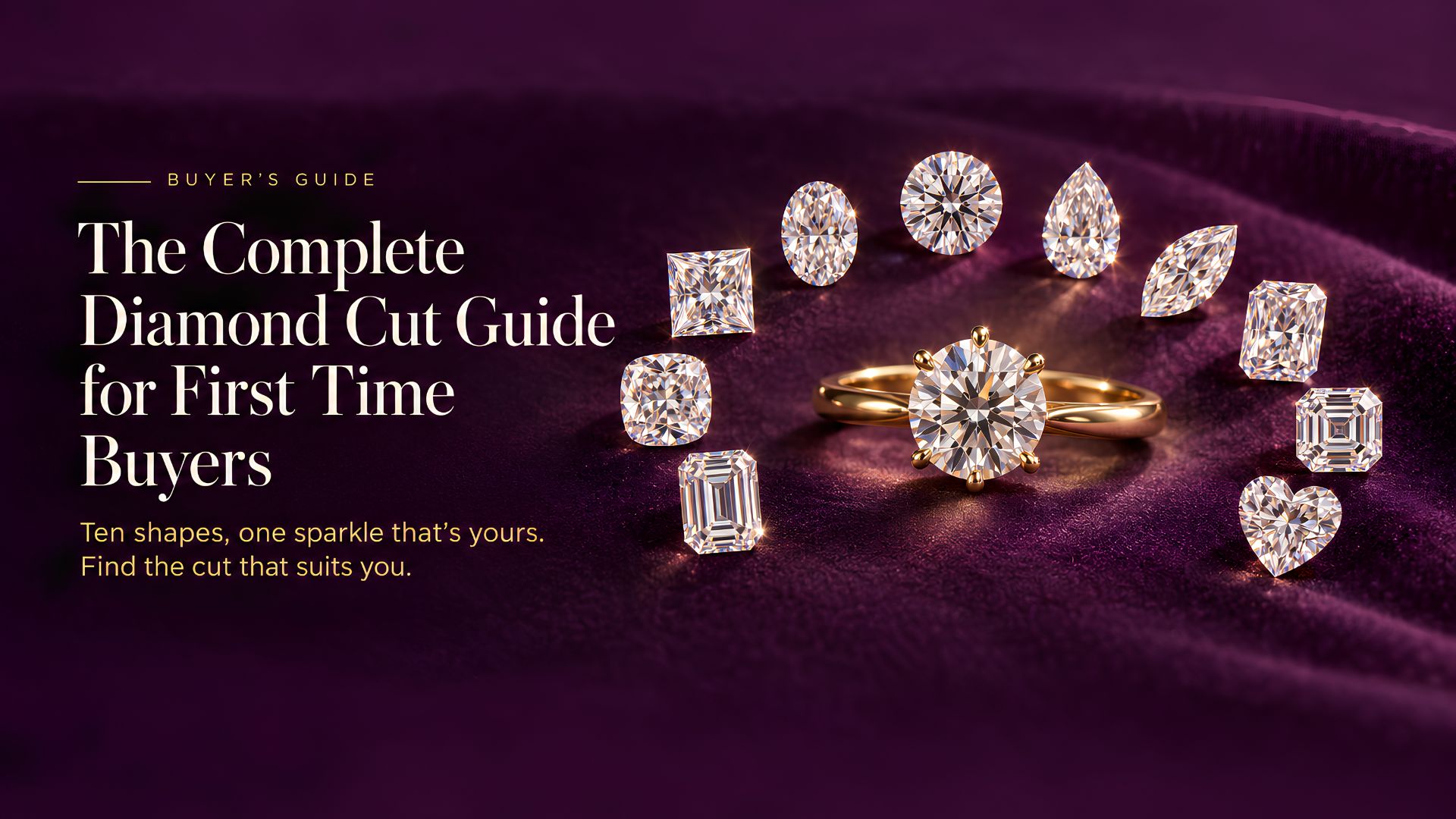
Round brilliant: This classic shape has carefully arranged facets designed to maximise brilliance. Consequently, it remains a popular choice for engagement rings and everyday diamond jewellery.
Oval: Oval diamonds offer an elongated appearance that can make fingers look longer. They also provide a contemporary alternative to traditional round stones. However, some oval diamonds display a bow tie effect, which buyers should assess before purchasing.
Princess: With its square outline and brilliant faceting, the princess cut offers a modern appearance. Nevertheless, its pointed corners may need protective settings to reduce the risk of damage.
Emerald: This rectangular shape features step cut facets rather than the sparkle pattern of a brilliant cut. As a result, it creates elegant flashes and highlights the diamond’s clarity.
Pear: Combining a rounded end with a pointed tip, the pear shape offers a distinctive silhouette that works beautifully in pendants and rings.
Before choosing, compare several shapes in person or through reliable high quality images. The best option is the one that suits your taste and budget.[/vc_column_text][/vc_column][/vc_row][vc_row type=”in_container” full_screen_row_position=”middle” scene_position=”center” text_color=”dark” text_align=”left” overlay_strength=”0.3″ shape_divider_position=”bottom”][vc_column column_padding=”no-extra-padding” column_padding_position=”all” background_color_opacity=”1″ background_hover_color_opacity=”1″ column_shadow=”none” column_border_radius=”none” width=”1/1″ tablet_text_alignment=”default” phone_text_alignment=”default” column_border_width=”none” column_border_style=”solid”][vc_custom_heading text=”Diamond Cut, Carat, Colour and Clarity”][vc_column_text]When shopping for diamonds, you will often hear about the four Cs: cut, carat, colour and clarity. Each factor contributes to the diamond’s overall quality, appearance and price.
Carat measures weight, not the exact size of a diamond. Two diamonds with the same carat weight can appear different in size because their proportions and shapes differ.
Colour refers to how much colour a diamond displays. In the standard grading scale for colourless diamonds, grades progress from D, which is colourless, towards Z, which shows increasing colour.
Clarity measures the presence of internal characteristics, known as inclusions, and external characteristics, known as blemishes. However, some inclusions are difficult to see without magnification and may not noticeably affect the diamond’s appearance.
So, how should you balance these factors? Start with a cut quality that delivers the appearance you want, then compare colour, clarity and carat weight within your budget.
This Diamond Cut Guide highlights an important principle: you do not necessarily need the highest grade in every category to find a beautiful diamond. Instead, focus on the combination that offers the best balance for your needs.[/vc_column_text][/vc_column][/vc_row][vc_row type=”in_container” full_screen_row_position=”middle” scene_position=”center” text_color=”dark” text_align=”left” overlay_strength=”0.3″ shape_divider_position=”bottom”][vc_column column_padding=”no-extra-padding” column_padding_position=”all” background_color_opacity=”1″ background_hover_color_opacity=”1″ column_shadow=”none” column_border_radius=”none” width=”1/1″ tablet_text_alignment=”default” phone_text_alignment=”default” column_border_width=”none” column_border_style=”solid”][vc_custom_heading text=”How to Choose the Right Diamond Cut for Your Budget”][vc_column_text]Setting a realistic budget before you start shopping can make the buying process much easier. First, decide how much you feel comfortable spending. Then, compare diamonds that fit your budget rather than stretching your finances to purchase a particular size.
If sparkle matters most to you, a well cut round brilliant diamond may be an excellent starting point. Alternatively, oval and pear shapes can create an elongated appearance that some buyers prefer.
You can also explore slightly lower carat weights. For example, a diamond just below a popular weight threshold may cost less while still offering a beautiful appearance, depending on its dimensions and proportions.
However, do not compromise on transparency. Ask the jeweller about the diamond’s grading report, whether it is natural or laboratory grown, and the return policy before committing to a purchase.
Additionally, compare the complete price of the finished jewellery, including the setting and any additional charges. This helps you understand the total cost rather than focusing on the stone alone.
Ultimately, the right diamond is one that meets your priorities without putting unnecessary pressure on your budget.[/vc_column_text][/vc_column][/vc_row][vc_row type=”in_container” full_screen_row_position=”middle” scene_position=”center” text_color=”dark” text_align=”left” overlay_strength=”0.3″ shape_divider_position=”bottom”][vc_column column_padding=”no-extra-padding” column_padding_position=”all” background_color_opacity=”1″ background_hover_color_opacity=”1″ column_shadow=”none” column_border_radius=”none” width=”1/1″ tablet_text_alignment=”default” phone_text_alignment=”default” column_border_width=”none” column_border_style=”solid”][vc_custom_heading text=”Natural Diamonds and Laboratory Grown Diamonds”][vc_column_text]First time buyers should also understand the difference between natural and laboratory grown diamonds. Both consist of crystallised carbon and share essentially the same chemical composition and crystal structure.
Natural diamonds form beneath the Earth’s surface over geological periods, while laboratory grown diamonds develop through controlled processes that replicate aspects of natural diamond formation.
Both types can display excellent cut quality. Therefore, the origin of a diamond does not automatically determine how well it reflects light.
However, natural and laboratory grown diamonds can differ considerably in price. Laboratory grown options often cost less for comparable characteristics, allowing buyers to consider a larger stone or allocate more of their budget to the setting.
Resale value is another consideration. Neither type guarantees a particular future selling price, and laboratory grown diamonds generally have different resale market dynamics from natural diamonds.
If you already own gold jewellery that you no longer wear, you might also consider whether you wish to sell your gold to help fund a new purchase. Before doing so, obtain a clear valuation and compare your options carefully.[/vc_column_text][/vc_column][/vc_row][vc_row type=”in_container” full_screen_row_position=”middle” scene_position=”center” text_color=”dark” text_align=”left” overlay_strength=”0.3″ shape_divider_position=”bottom”][vc_column column_padding=”no-extra-padding” column_padding_position=”all” background_color_opacity=”1″ background_hover_color_opacity=”1″ column_shadow=”none” column_border_radius=”none” width=”1/1″ tablet_text_alignment=”default” phone_text_alignment=”default” column_border_width=”none” column_border_style=”solid”][vc_custom_heading text=”Check the Setting and Everyday Practicality”][vc_column_text]Even a beautifully cut diamond needs the right setting. The setting affects the jewellery’s appearance, comfort and ability to protect the stone during everyday wear.
For example, a solitaire setting allows the diamond to take centre stage, while a halo setting surrounds the main stone with smaller diamonds to create additional visual impact. Meanwhile, a bezel setting surrounds the diamond’s edge with metal, offering a more enclosed design.
Think about your lifestyle before choosing. If you work with your hands frequently, a lower profile setting may feel more practical than a high setting that catches on clothing.
Similarly, if you are choosing diamond jewellery to complement a traditional mangalsutra, consider how the diamond’s shape, setting and overall design work with the piece.
Ask your jeweller about maintenance, cleaning and the security of the stone. Regular inspections can help identify loose settings before a diamond becomes damaged or goes missing.[/vc_column_text][/vc_column][/vc_row][vc_row type=”in_container” full_screen_row_position=”middle” scene_position=”center” text_color=”dark” text_align=”left” overlay_strength=”0.3″ shape_divider_position=”bottom”][vc_column column_padding=”no-extra-padding” column_padding_position=”all” background_color_opacity=”1″ background_hover_color_opacity=”1″ column_shadow=”none” column_border_radius=”none” width=”1/1″ tablet_text_alignment=”default” phone_text_alignment=”default” column_border_width=”none” column_border_style=”solid”][vc_custom_heading text=”Make Your First Diamond Purchase with Confidence”][vc_column_text]Choosing your first diamond becomes much easier when you understand how cut quality influences its beauty. Although carat, colour and clarity all matter, the cut plays a particularly important role in how effectively a diamond interacts with light.
Take your time, compare different shapes and review grading reports before making your decision. Furthermore, consider your budget, lifestyle and preferred jewellery design so that your purchase feels both practical and personal.
This Diamond Cut Guide gives you the foundation to ask better questions and compare your options with confidence. Remember, the most expensive diamond is not necessarily the best choice for you.
Instead, look for a diamond that combines appealing light performance, reliable documentation and a design you genuinely love. With the right information, you can choose a piece of diamond jewellery that brings you joy for years to come.[/vc_column_text][/vc_column][/vc_row][vc_row type=”in_container” full_screen_row_position=”middle” scene_position=”center” text_color=”dark” text_align=”left” overlay_strength=”0.3″ shape_divider_position=”bottom”][vc_column column_padding=”no-extra-padding” column_padding_position=”all” background_color_opacity=”1″ background_hover_color_opacity=”1″ column_shadow=”none” column_border_radius=”none” width=”1/1″ tablet_text_alignment=”default” phone_text_alignment=”default” column_border_width=”none” column_border_style=”solid”][vc_custom_heading text=”FAQs – Frequently Asked Questions”]